So the task at hand. Create a prototype of an artefact in two weeks based on a randomly chosen theme. So a two week game jam in essence.
The theme was chosen by using a board game called Dixit, a game based upon imagery and story-telling. All the cards were shuffled and one chosen at random to be our groups theme. This is the card we got.
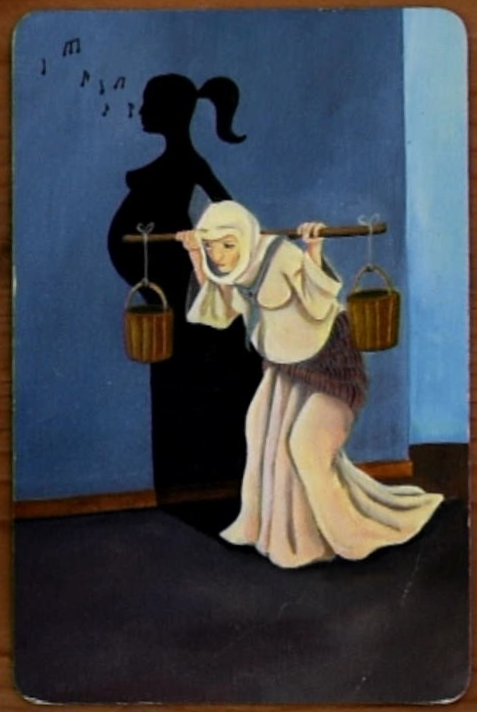
Now we were given the option to incorporate a randomly chosen news article if we were struggling to think of something from this card alone but I made a conscious decision that I did not want to do this, I wanted to challenge myself with this prototype and disrupt my usual working process, so I did not want to take any shortcuts if I could help it.
What I did next was, in essence, brainstorming. Now I do not think brainstorming, at least in the traditional way of putting a word in the middle of a piece of paper and then throwing down other words and drawing lines around them, works. For me brainstorming in a group exercise that needs input and exploration from a variety of people. So I grabbed my post it notes and started brainstorming, at work, with my colleagues around me.
This resulted in getting input from others straight away as this is my usual process. This input was both additional to my own thoughts but also used to give support to my ideas. It also allowed for some of the potential ‘sticking points’ to be brought forward and challenged at this early stage so they do not cause problems later.
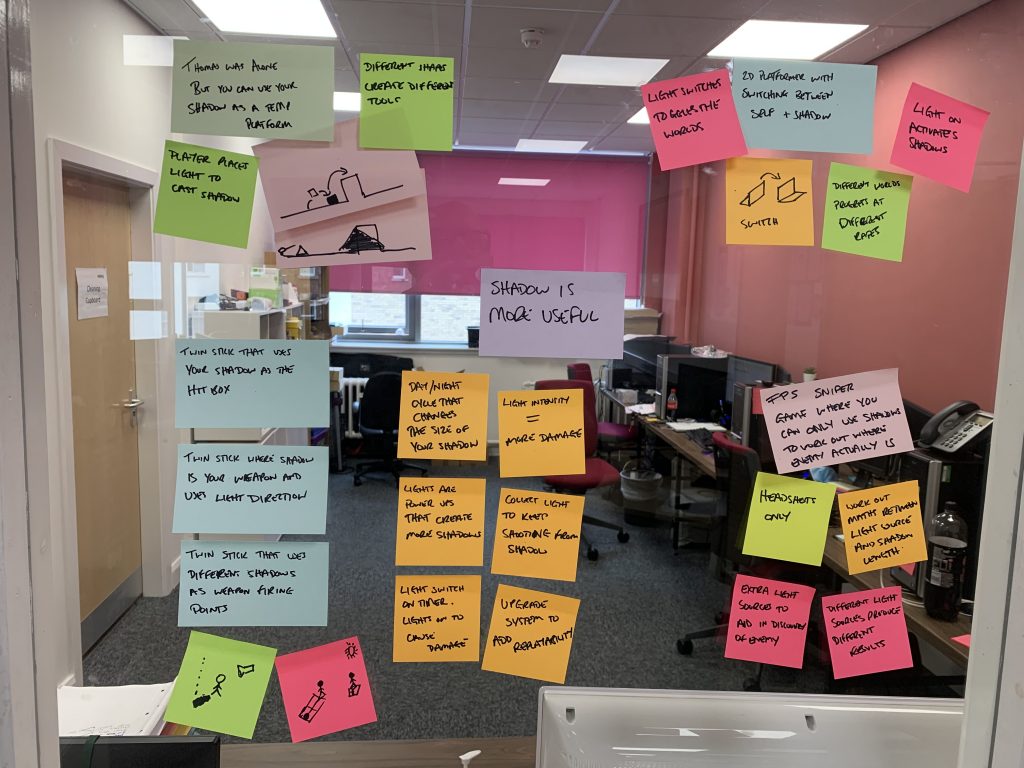
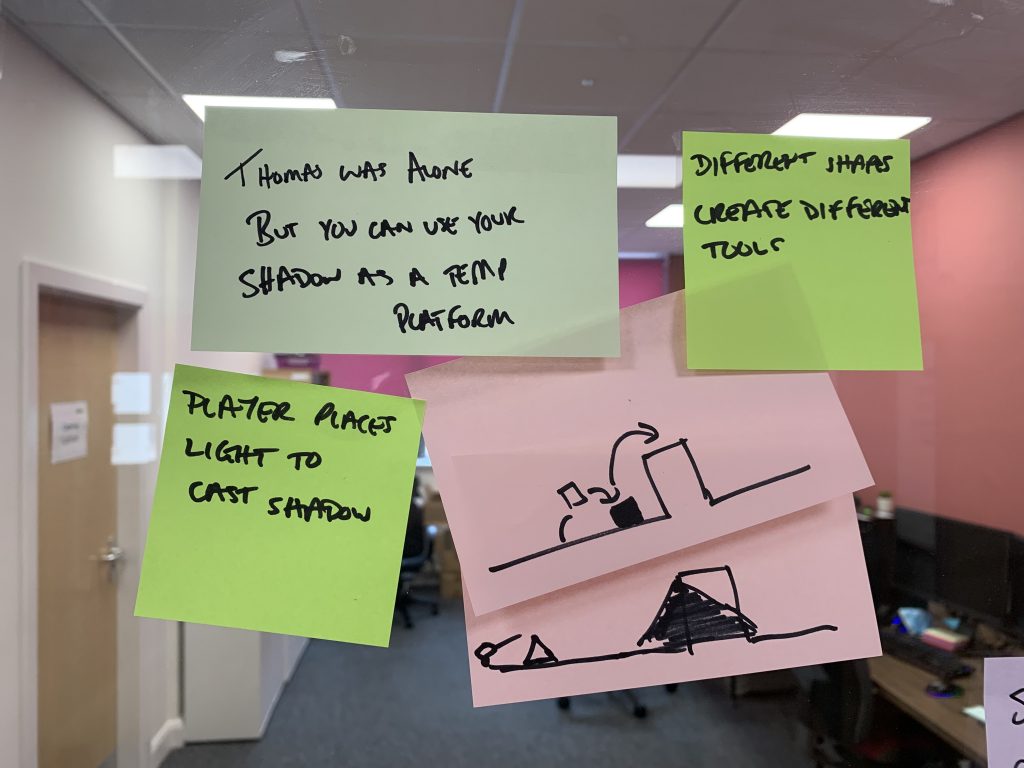
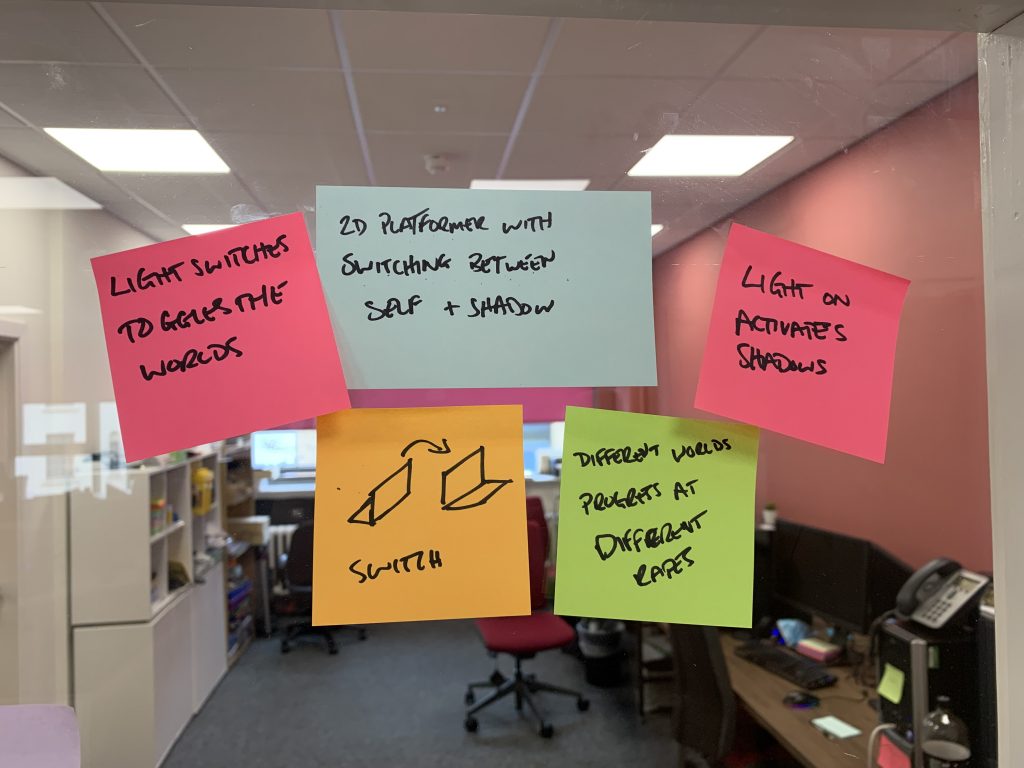
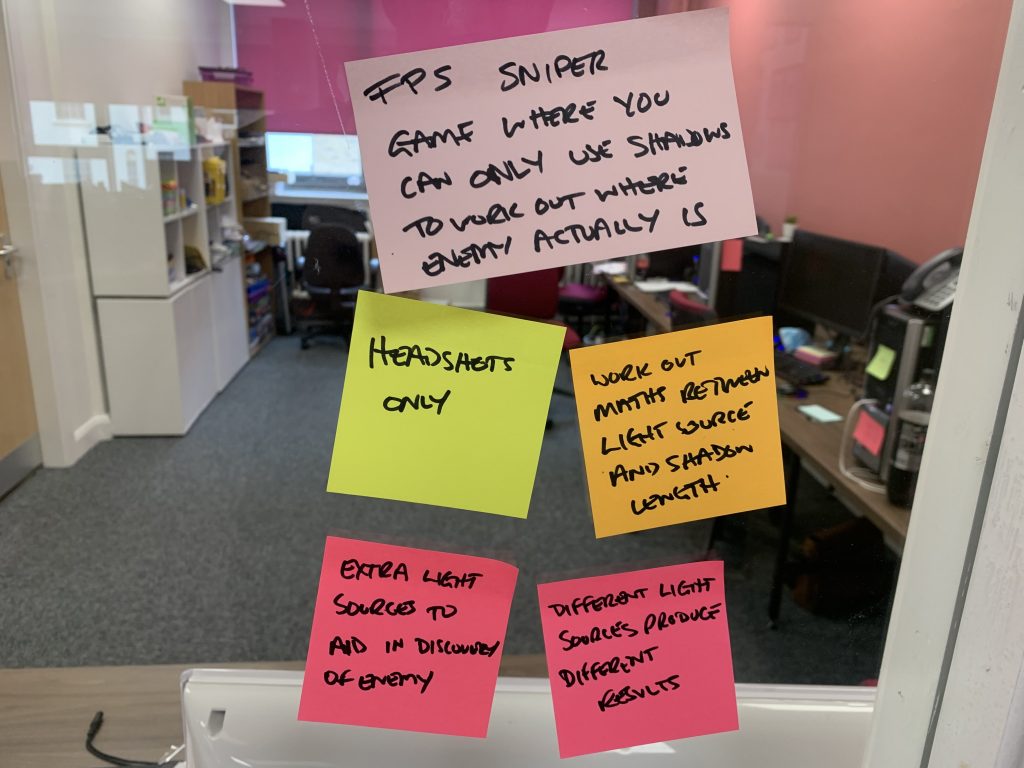
As you can see I came up with four different ideas in a small amount of time. While I was doing this I was constantly referencing the original image and trying to find something I could feed off.
The image itself could be interpreted in many different ways but the one thing that shone through for me in every aspect was strength. The strength of the woman carrying the milk pails, the strength of the shadow going through the struggles of pregnancy but with a happy attitude, the strength of the metaphor that even if the outside looks weak the inside is strong.
So with all this in mind I decided to give myself a new theme, something more akin to what I am used to from game jams I have experienced in the past. If, for example, you look through the past themes for Ludum Dare you can see that the themes have a wider scope to them but are also sometimes instructional. Things like ‘Entire game on one screen’ or ‘You are the villain’ give a very specific instruction that you must incorporate. Something the card seemingly did not give.
So I decided that I wanted to make something where the shadow (a somewhat useless and commonly passive aspect) would be the main game play mechanic, specifically weapon.
So out of all the brainstorming and ideation I decided to use the following idea.
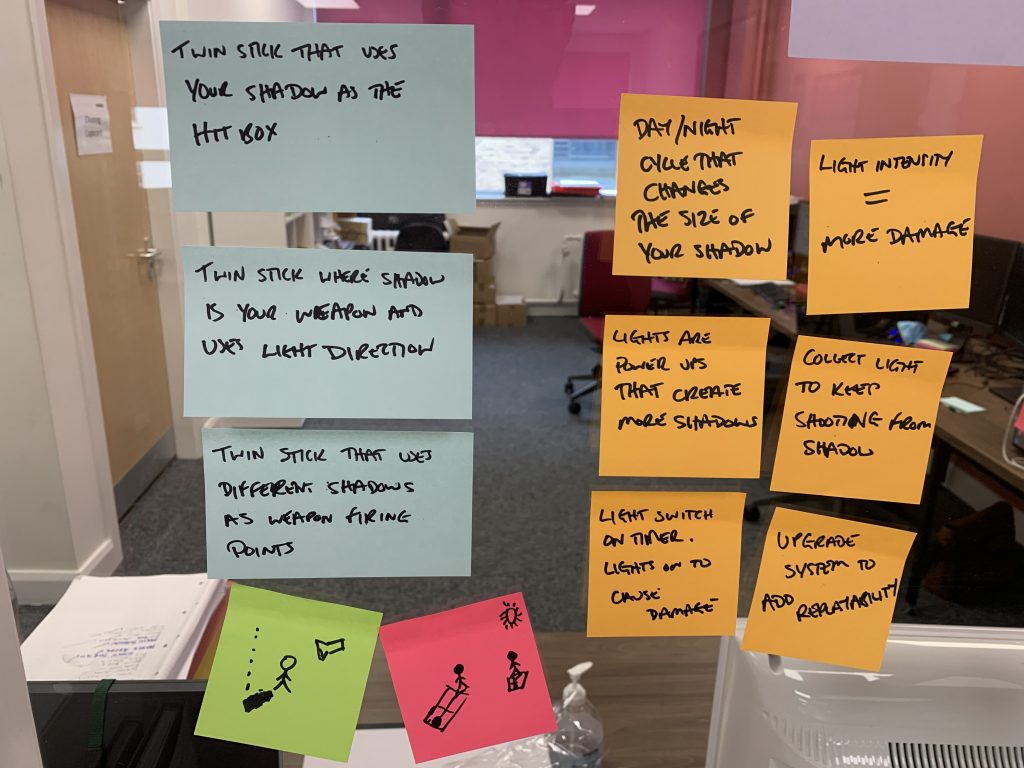
The basic premise of the game is that you control a light source that orbits around an object, I am going to use a sword for this to really counter balance the weapon not being the weapon aspect. This light source is used to create a shadow that will damage randomly generated enemies that move towards you from the outside of the screen. You have to rotate the light source around the object in order to kill this enemies.
It will also use a wave based mechanic, so at the end of each wave you will be able to utilise a resource you have obtained in the previous waves to improve your shadows effectiveness. This will be done by either increasing the width of the sword and casting a wider shadow, increasing the length of the sword to create a longer shadow, or increasing the intensity of the light creating a dark and more damaging shadow.
Enemies will take damage over time when the shadow is over them, so you will need to balance out your upgrading to make sure you are able to kill the enemies as the waves grow in difficulty. Ultimately you have to last as long as you can without an enemy touching the sword.
So in order to get that done I need to do some project management, and try to remember its just a prototype. As you can see from the image below I have already pulled out the two hardest aspects, well the ones that are actually integral to the game idea, to work on first. I also have found a way to incorporate my new found knowledge of weighted random generation into the wave mechanic enemy choices.
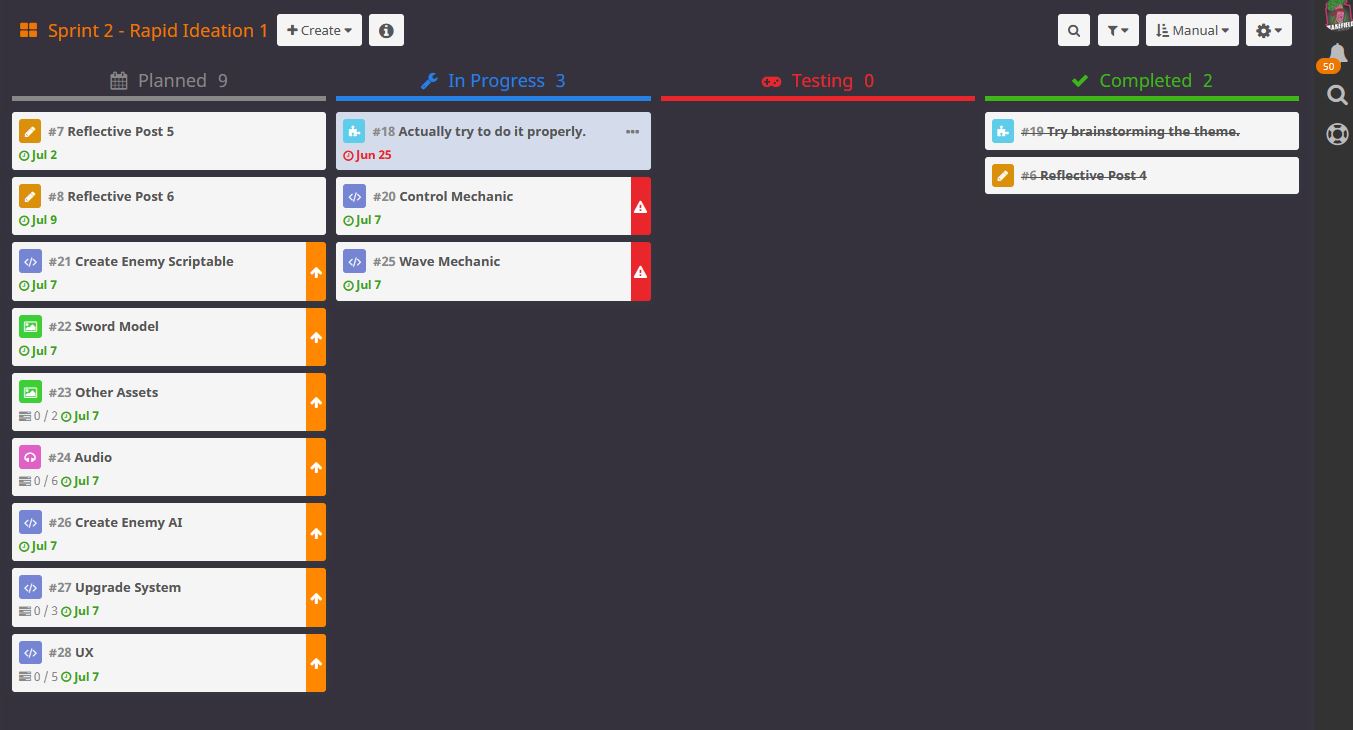
So as you can see I am applying a full agile methodology to this. I have my product backlog in the Planned column and my current sprint backlog in the In Progress column. I have a feeling I will be adding to the Planned column as I go but at this point this is the bare minimum I personally feel I need to get done in order to succeed to the level I want to with this product.
References
Libellud.com. 2021. Dixit – Libellud. [online] Available at: <https://www.libellud.com/dixit/?lang=en> [Accessed 27 June 2021].
Ludumdare.com. n.d. Ludum Dare Competitions | Ludum Dare. [online] Available at: <http://ludumdare.com/compo/ludumdare/> [Accessed 27 June 2021].
Figures
Feature Image: Photo by Martino Pietropoli on Unsplash
Figure 1: Rubino, G & Thorndike, K (2021) ‘Chosen cards for the activity’ Created on 23rd June 2021
Figure 2: Charlish, R (2021) ‘The idea generation process’ Created on 25th June 2021
Figure 3: Charlish, R (2021) ‘The chosen idea’ Created on 25th June 2021
Figure 4: Charlish, R (2021) ‘Hack n Plan project managed’ Created on 25th June 2021


0 Comments